
Travel expenses for sole traders can be a significant business cost. However, not every journey you make for work will qualify for tax relief.
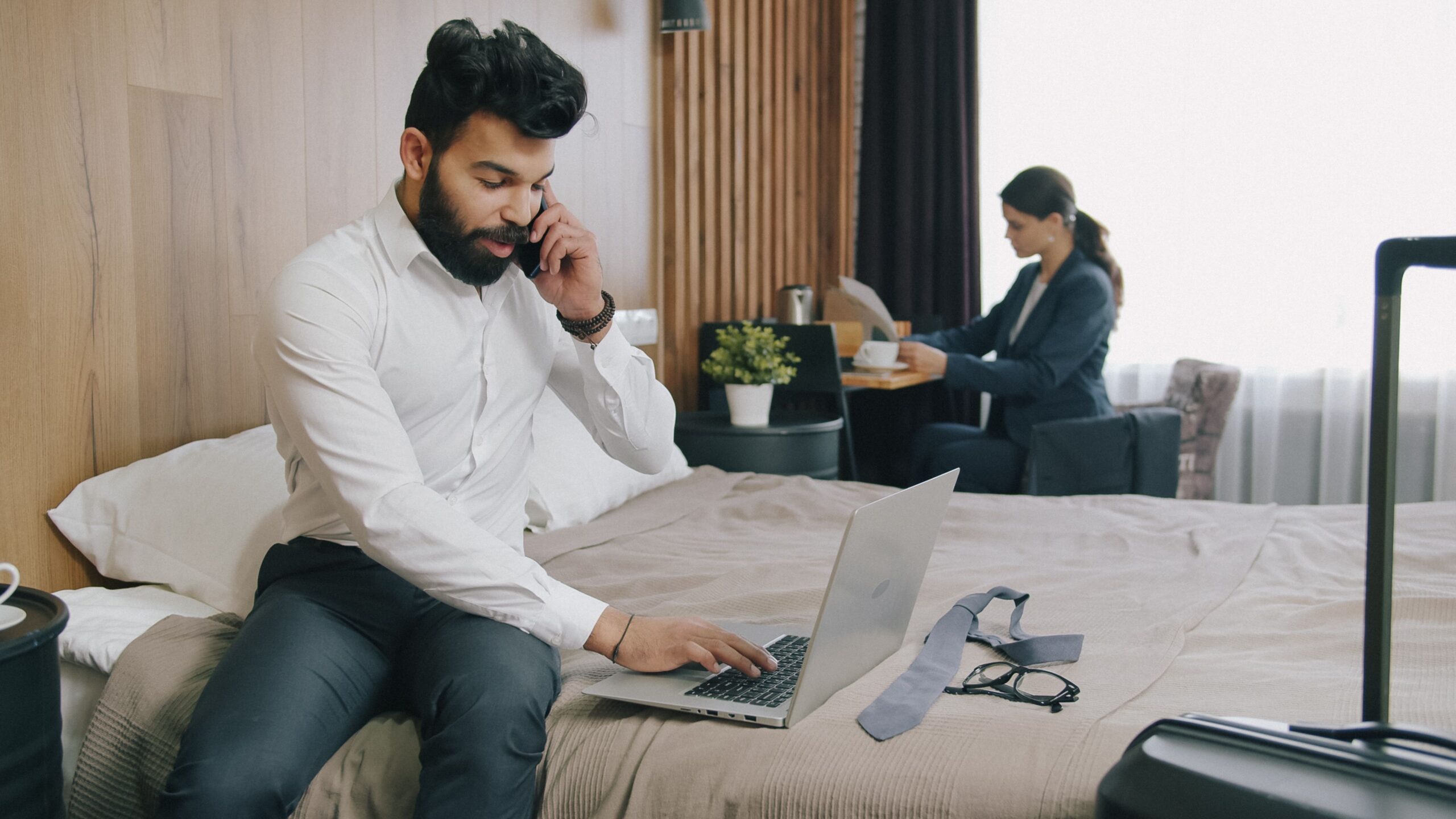
Sole traders and partners can generally claim travel expenses incurred wholly and exclusively for the purposes of their business. This can include business mileage, train and taxi fares, parking, tolls, hotels and, in certain circumstances, meals and subsistence.
The difficult part is often deciding whether a journey is genuinely part of running your business or simply puts you in a position to carry out your work.
In this guide, we explain the rules for travel expenses for sole traders, including business mileage, hotels and subsistence.
What travel expenses can a sole trader claim?
If your journey qualifies as business travel, allowable expenses could include:
However, you cannot normally claim the cost of ordinary travel between your home and your usual place of business.
In addition, you also cannot claim private travel costs or fines and penalties, such as parking fines.
What counts as business travel for a sole trader?
Importantly, the starting point is whether the travel expense has been incurred wholly and exclusively for the purposes of your trade or profession.
Therefore, a journey to visit a client, attend a business meeting, visit a supplier or attend a relevant business event may therefore qualify.
However, simply travelling somewhere because that is where you carry out your work does not necessarily make the journey a qualifying business expense.
Furthermore, this distinction is particularly important when considering journeys between your home and another place where you regularly work.
Example – travelling to visit a client
Sarah is a self-employed marketing consultant who runs her business from an office in Bournemouth.
She travels from her office to a client's premises in London for a meeting.
The journey is undertaken as part of her business activities, so the cost of the qualifying business journey can normally be claimed.
Example – travelling to your normal workplace
Tom is a self-employed physiotherapist who works from the same clinic five days a week but lives elsewhere.
Although he is self-employed, his regular journeys between home and the clinic are unlikely to qualify simply because he carries out some administrative work from home.
The clinic is where his professional activities are normally carried out, so the home-to-clinic journey may be regarded as ordinary travel to his place of business.
If I work from home, can I claim my travel costs?
Potentially, but this is an area where the facts matter.
Running your business genuinely from home can mean that journeys from your business base to clients, suppliers and other temporary business locations qualify.
However, working from home does not automatically make every journey from your home a business journey.
HMRC will look at where the business is actually carried on.
Factors that may be relevant include:
However, simply setting aside a room as an office or doing some paperwork at home will not necessarily turn your home into the business base for travel purposes.
Why does your business base matter?
This issue has been considered by the courts and tax tribunals on a number of occasions.
One of the most well-known tax cases involved Dr Samadian, a self-employed consultant who worked at private hospitals as well as maintaining an office at home.
The fact that he carried out some professional activities at home did not mean that all journeys between his home and the hospitals were allowable business travel.
Importantly, cases such as this demonstrate an important principle: there is a difference between travelling in the course of carrying on your business and travelling to a location in order to put yourself in a position to carry out that business.
Consequently, for sole traders who regularly work at different locations, establishing where the business is actually based can therefore be crucial when determining which journeys are allowable.
How can sole traders claim car and van expenses?
There are generally two ways to calculate your allowable vehicle costs:
| Method | How it works |
|---|---|
| Simplified mileage expenses | Claim a fixed amount for each qualifying business mile. |
| Actual vehicle costs | Claim the business proportion of your actual vehicle running costs. |
Crucially, you should consider which method is appropriate before making your first claim because the choice can affect how the vehicle must be treated in later years.
What are the sole trader mileage rates for 2026/27?
From 6 April 2026, the simplified mileage rate for cars and goods vehicles increased.
For the 2026/27 tax year, the rates are:
| Vehicle | Business mileage | 2026/27 rate |
|---|---|---|
| Car or goods vehicle | First 10,000 miles | 55p per mile |
| Car or goods vehicle | Over 10,000 miles | 25p per mile |
| Motorcycle | All qualifying miles | 24p per mile |
The 55p rate increased from 45p per mile from 6 April 2026.
Example – claiming simplified mileage expenses
James is a self-employed IT consultant and drives 12,000 qualifying business miles during 2026/27.
His deduction is:
10,000 miles × 55p = £5,500
2,000 miles × 25p = £500
Total allowable mileage expense = £6,000
James does not receive £6,000 from HMRC. Instead, the £6,000 is deducted when calculating his taxable business profit.
If James pays Income Tax at 40%, for example, a £6,000 deduction could potentially reduce his Income Tax liability by £2,400, before considering any National Insurance effect.
What does the mileage rate cover?
The simplified mileage rate is intended to cover the costs associated with owning and running the vehicle.
This includes costs such as:
However, you cannot use the mileage rate and then claim these running costs separately for the same vehicle.
Additionally, qualifying business parking charges and other travel expenses can potentially be claimed separately.
Can I claim my actual vehicle costs instead?
Yes. Rather than using simplified mileage expenses, you may be able to calculate the actual costs of running the vehicle and claim the proportion relating to business use.
Relevant costs can include:
If the vehicle is also used privately, you will need to restrict the deduction accordingly.
Example – business and private use
Emma's allowable car running costs for the year are £8,000.
Her mileage records show that 70% of her total mileage relates to qualifying business journeys.
Subject to the normal rules, the deductible business element would therefore be:
£8,000 × 70% = £5,600
The tax treatment of the cost of purchasing the vehicle is dealt with separately and may involve capital allowances, particularly in the case of cars.
Whether actual costs or simplified mileage produces the better result will depend on the vehicle, its running costs and the level of business use.
Can I claim train, taxi and other travel expenses?
Yes, where the underlying journey qualifies as business travel.
This can include:
Furthermore, the fact that a journey is expensive does not automatically prevent a deduction. The important question is why the cost was incurred.
However, any private element needs to be considered.
What happens if I combine a business trip with a holiday?
Combining business and private travel requires particular care.
The basic tax rule is that expenditure must be incurred wholly and exclusively for the purposes of the business.
However, where a cost can be clearly split into identifiable business and private elements, it may be possible to claim the business element. Additionally, there may be an argument for claiming the cost if the primary purpose was business related and any private element was incidental.
Example – extending a business trip
John travels to Edinburgh for a two-day business conference and decides to stay for the weekend afterwards to meet up with friends.
The cost relating specifically to the conference and qualifying business travel may be allowable.
However, the additional hotel nights, meals and other costs relating to his private weekend would not be allowable.
Furthermore, if extending the trip causes the travel cost itself to increase, the additional private cost would also need to be excluded from any claim. Importantly, maintaining good records are particularly important where a trip has both business and personal elements.
Can sole traders claim meals and subsistence?
This is an area that is frequently misunderstood.
The general rule is that the everyday cost of food and drink is a personal expense. You need to eat regardless of whether you are working, so buying lunch while you are out at work does not automatically make it tax deductible.
However, there are important exceptions.
Reasonable food and drink costs may be allowable where they are incurred in conjunction with business travel and:
In addition, subsistence can also normally be claimed where a qualifying business journey involves an overnight stay.
Example – occasional business journey
Victoria normally runs her design business from Poole but travels to Manchester for a one-off industry conference.
The journey is outside her normal pattern of business travel.
Provided the journey itself qualifies, reasonable subsistence costs incurred in connection with it may also qualify.
Example – buying lunch while working
Ben is a self-employed electrician who normally works in the same local area.
He buys lunch from a café while working.
The fact that he is working when he eats his lunch does not, by itself, make the cost an allowable business expense.
Crucially, the subsistence rules need to be considered in the context of his usual working and travel pattern
What is an itinerant trade?
An itinerant business is one where travelling from place to place is an inherent part of carrying on the trade.
Someone who regularly carries out work at changing locations may therefore have a different tax position from someone who travels every day to the same permanent business location.
This distinction can be particularly relevant to tradespeople, construction workers and other self-employed individuals whose work requires them to operate at numerous different sites.
It is the actual pattern of the business that matters rather than the job itself.
Can I claim hotels and overnight accommodation?
Where a qualifying business journey requires you to stay away from home overnight, the reasonable cost of hotel accommodation can normally be claimed.
Additionally, reasonable meals taken in conjunction with the overnight stay can also generally qualify.
However, accommodation does not become tax deductible simply because staying close to your regular business premises is more convenient.
If your normal business base is away from your home and you pay for accommodation simply so that you can live near that business base, the expenditure is likely to be regarded as personal rather than business expenditure.
What records should I keep for business travel?
Good records are particularly important for travel expenses because the distinction between business and private journeys is not always apparent.
For mileage claims, we recommend keeping a contemporaneous mileage log recording:
You should also retain receipts and invoices for other travel costs, such as train tickets, hotels, parking and taxis.
For example, accounting software (e.g. FreeAgent or Xero) and mileage-tracking apps can make this much easier, but the records should still show why the journey was undertaken, rather than simply recording that a journey took place.
Travel expenses for sole traders – key points
Ultimately, the tax treatment of travel expenses depends on the purpose of the journey and the way your business actually operates.
We've summarised this below
| Expense | Usually allowable? |
|---|---|
| Travel from home to a normal business base |  Usually no Usually no |
| Travel from your business base to a client |  Usually yes Usually yes |
| Travel between clients or business locations | Usually yes |
| Train to an occasional business conference | Usually yes |
| Private travel | No |
| 2026/27 qualifying car mileage – first 10,000 miles | 55p per mile |
| Qualifying car mileage above 10,000 miles | 25p per mile |
| Parking for a qualifying business journey | Usually yes |
| Parking or speeding fines | No |
| Normal everyday lunch | Usually no |
| Reasonable subsistence on qualifying occasional travel | Potentially |
| Hotel required for a qualifying overnight business trip | Usually yes |
| Extra hotel nights added for a holiday | No |
Importantly, the key question you must ask yourself is not simply “Was I travelling because of work?” but whether the expense was incurred as part of carrying on your business.
Getting sole trader travel expenses right
The key point with travel expenses is not simply whether a journey was connected with work, but whether the cost was incurred as part of carrying on your business.
Importantly, that distinction can be particularly relevant if you work from home, regularly travel to the same location or combine business and private travel.
Maintaining good records is also essential. Therefore, ensure you keep details of your business journeys and retain receipts for trains, hotels, parking and other travel costs so that you can support the expenses claimed if HMRC ever asks.
If you're unsure which costs you can claim, we can review your circumstances and help you make sure you're claiming the expenses you're entitled to without falling foul of HMRC's rules.
And if you'd like to know how we can help you with all of this, or with anything else, feel free to give us a call on 01202 048696 or email us at [email protected].
Alternatively, please feel free to complete our Business Questionnaire here.